Milk in coffee: the science and the practice
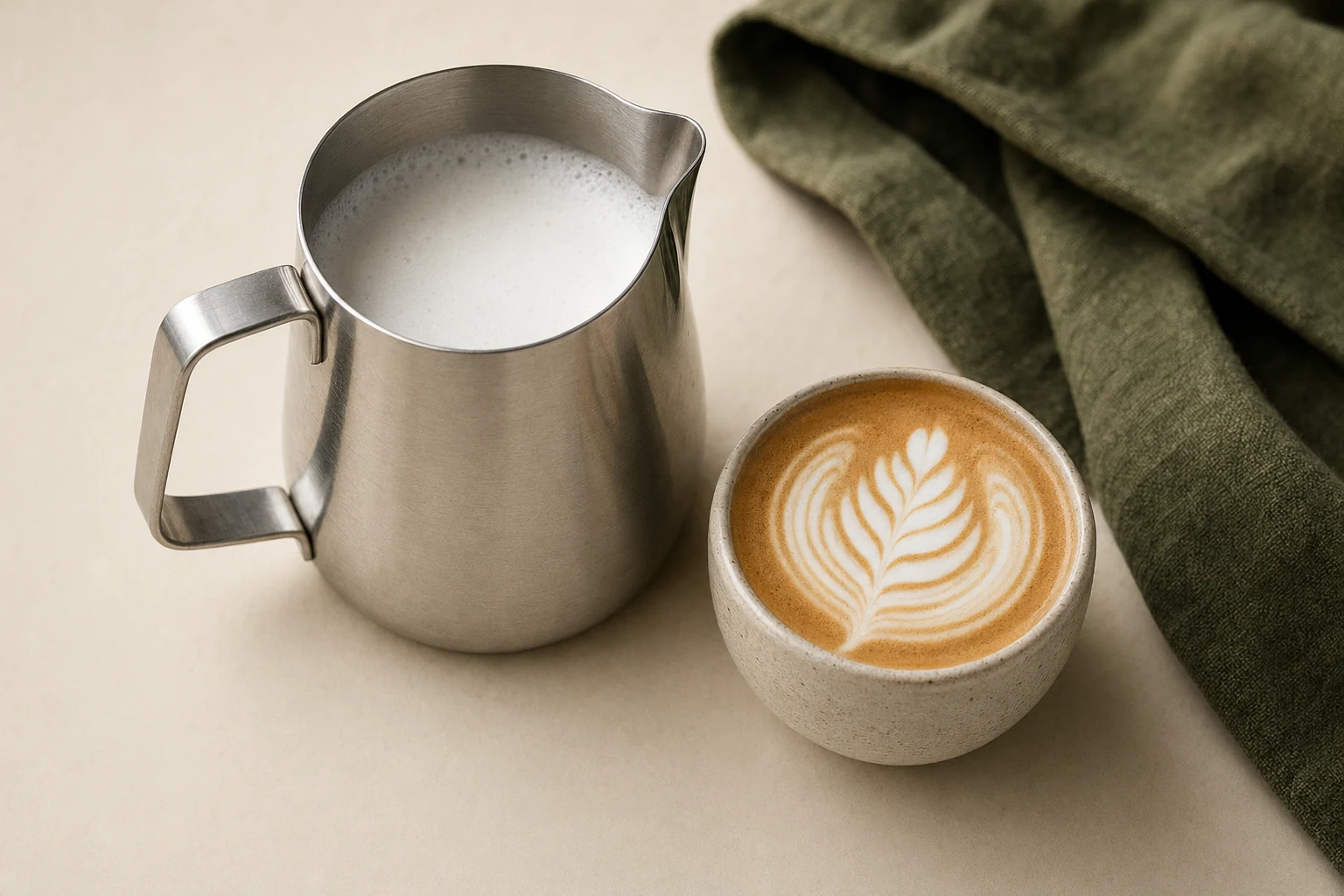
Milk is not just "pour it into the espresso." Foam — microfoam, as we call it — is the result of a chemical reaction between proteins and fats, accelerated by steam. If you understand how it works, everything gets easier.
Which milk and why
Whole milk (3.6% fat and up) gives the most stable, sweetest microfoam. The fats stabilise the air bubbles, and lactose tastes sweetest at 60–65 °C.
Skim foams more, but the foam is dry and collapses fast. Plant alternatives — barista formulas from Oatly, Alpro, or Minor Figures — work, but want a slightly lower temperature (55–60 °C).
Rules of foam
- Temperature:Stop at 60–65 °C. Higher than that scorches the proteins and turns the milk bitter.
- Angle:Wand slightly off-centre — it creates a vortex that mixes air and milk evenly.
- Timing:Air for the first 2–3 seconds; then submerge the wand to texture.
- Volume:Fill the pitcher to about a third — milk grows by roughly 30%.
Well-textured milk sounds like wet paper tearing. No screech, no gurgle.
Cappuccino, flat white, or latte?
Cappuccino: 1/3 espresso, 1/3 milk, 1/3 foam. Bright and dense.
Flat white: espresso plus an even microfoam, no clear separation. The most concentrated milk drink.
Latte: espresso plus a lot of milk and a thin layer of foam. The softest and the largest by volume.