Espresso at home: from zero to a calibrated machine
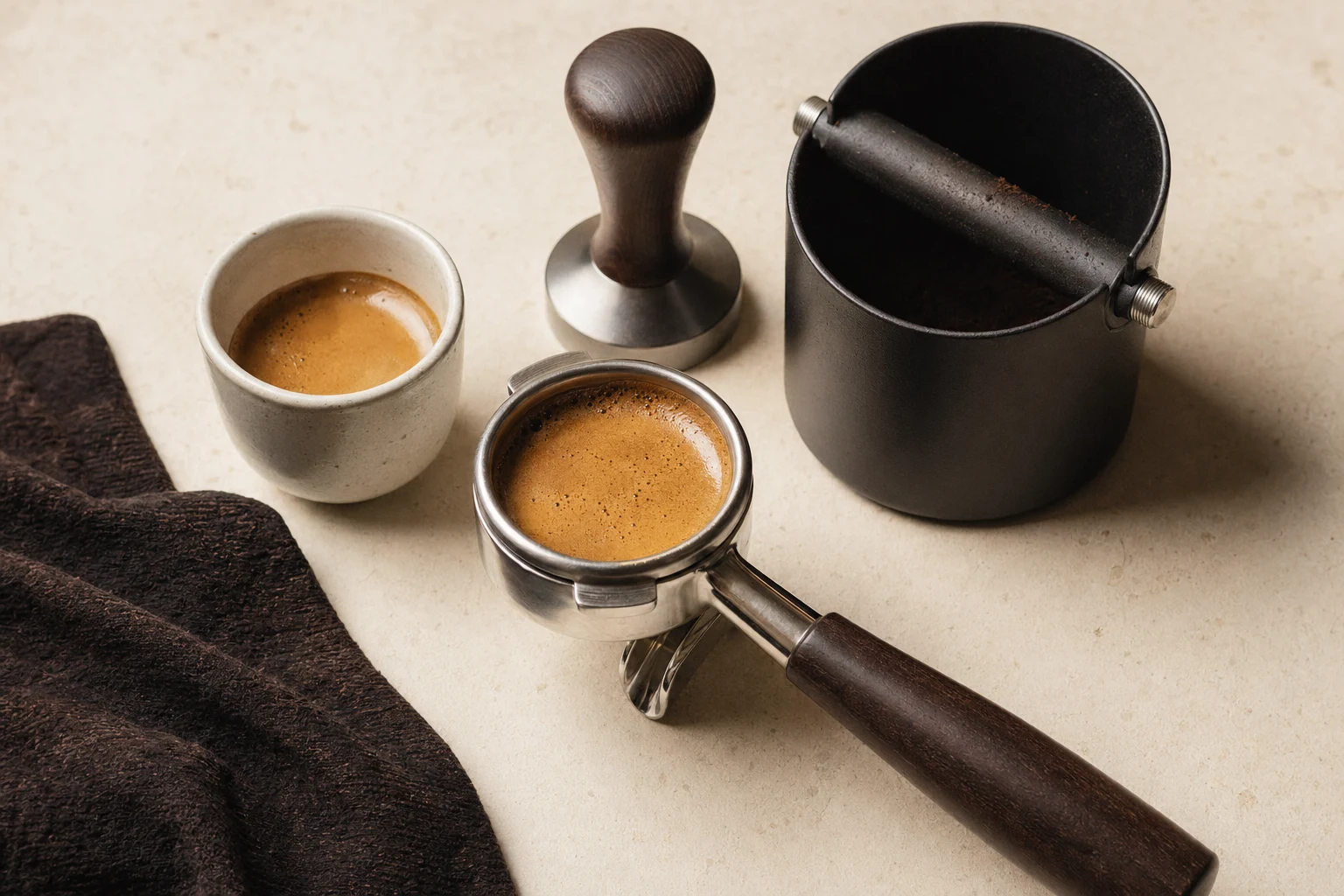
Espresso is the most demanding home brewing method. Small mistakes amplify — one bad shot can cost more than two bad V60s. But when everything lines up, nothing else compares.
The three things you do not compromise on
First: the grinder should cost at least as much as the machine. An uneven grind kills espresso before it has even started.
Second: the beans should be freshly roasted — between 7 and 21 days from the roast date. Earlier and they out-gas too much; later and they lose the aromatics.
Third: the water should have medium mineralisation. Too hard and it scales the boiler and dulls the cup. Too soft and the cup is thin and sour.
Starter setup under €1500
- Machine:Lelit Anna or Rancilio Silvia — both reliable, repairable, and they teach craft.
- Grinder:Eureka Mignon Specialita, or the 1Zpresso J-Max as a hand-cranked option.
- Tamper:The right diameter for your basket — 58 mm for most machines.
- Scale:Acaia Lunar or Timemore Black Mirror Nano.
- WDT tool and puck screen — underrated, and they change the cup.
Standard espresso: 1:2 ratio
18 g of freshly ground coffee in the basket. Even it out with the WDT tool in eight points. Tamp with about 15 kg of pressure, perpendicular to the basket.
Lock the basket into the group head. Start the pump. Wait 5–8 seconds for first drops to bloom.
Target 36 g of espresso in 25–30 seconds. Watch the stream — it should be thin, even, and the colour of honey.
Stop at 36 g. The first sips define the cup — sour means grind finer; bitter means coarser.
Espresso is probably the most intolerant method of preparation of any food or drink in the world.